


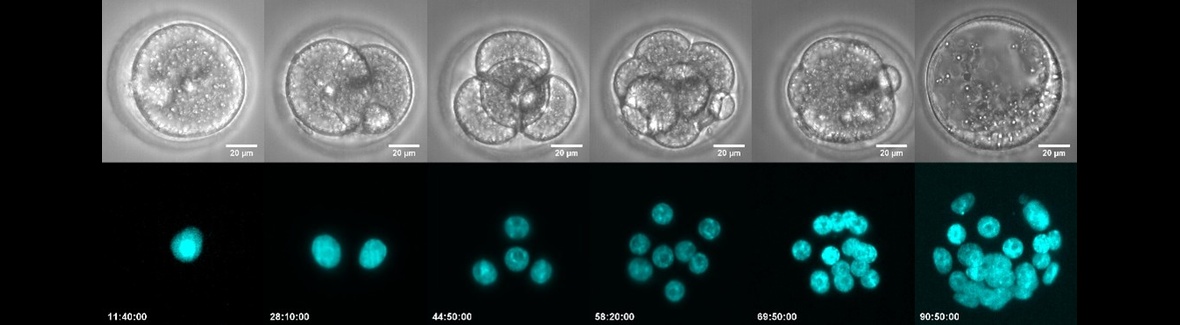
News and Updates
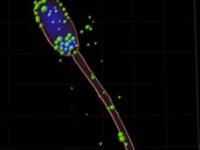
Czech scientists have, for the first time, comprehensively characterised tiny membrane vesicles released from different regions of the porcine epididymis and demonstrated that they bind to sperm and deliver molecules essential for their maturation. The findings, published in the Journal of Extracellular Vesicles, provide new insights into sperm biology and may contribute to the future development of assisted reproduction methods and the diagnosis of male infertility.
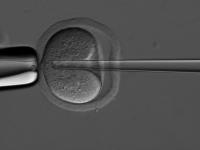
Can sperm retrieved after an individual's death or stored under suboptimal conditions give rise to healthy offspring? Researchers propose using interspecific intracytoplasmic sperm injection (ICSI) as a novel biological test to better assess the quality of these rare sperm samples. In a new paper, Helena Fulka's team discusses the potential, benefits, and limitations of this approach.
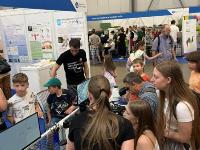
Visitors to the Science Fair, the largest science outreach event in the Czech Republic, which attracted more than 50,000 visitors of all ages this year, had another opportunity to explore the topics of the ART – Future of Assisted Reproduction programme. The participating institutes showcased their research at their own exhibition stands.
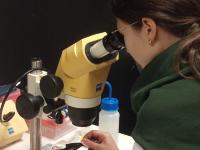
This year again, students of the Master's programme in Reproductive and Developmental Biology at the Faculty of Science, Charles University, took part in the practical course Experimental Work with Mammalian Oocytes and Embryos. Held from 25 to 28 May 2026, the course introduced students to techniques for the isolation and in vitro culture of mammalian oocytes and early embryos, as well as the fundamentals of live-cell microscopy.
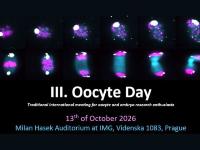
As part of the ART – Future of Assisted Reproduction project, the III Oocyte Day international conference will take place on 13 October 2026. The conference is organized by Dávid Drutovič from the Institute of Animal Physiology and Genetics of the Czech Academy of Sciences, in collaboration with the Institute of Molecular Genetics of the CAS.
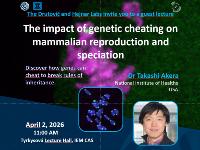
The Drutovič Lab welcomes Dr. Takashi Akera (National Institute of Health, USA) for a guest lecture on genetic conflict and non-Mendelian inheritance. The talk will explore how selfish genetic elements “cheat” to bias their transmission and reveal new insights into how meiotic drive shapes mammalian reproduction and evolution.
The Drutovič Lab welcomes Dr. Takashi Akera (National Institute of Health, USA) for a guest lecture on genetic conflict and non-Mendelian inheritance. The talk will explore how selfish genetic elements “cheat” to bias their transmission and reveal new insights into how meiotic drive shapes mammalian reproduction and evolution.
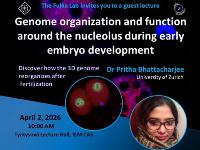
The Fulka Lab welcomes Dr Pritha Bhattacharjee (University of Zurich) for a guest lecture on genome organization in early embryos. The talk will present a new single-cell approach revealing how nucleolus–genome interactions shape 3D genome architecture after fertilization.
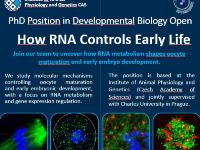
The Laboratory of Biochemistry and Molecular Biology of Germ Cells at the Institute of Animal Physiology and Genetics of the Czech Academy of Sciences offers a PhD position focused on studying the molecular mechanisms regulating oocyte maturation and early embryonic development. The project explores the role of RNA metabolism in controlling gene expression and cellular processes essential for the emergence of new life.

On 11 December 2025, an expert workshop entitled Assisted Reproduction in the Case Law of the European Court of Human Rights took place at the Institute of State and Law of the Czech Academy of Sciences in Prague and was organised under the auspices of the ART – Future of Assisted Reproduction project (Strategy AV21).
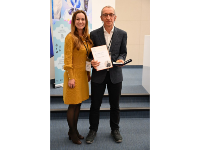
On November 25–26, 2025, the 28th Biological Days of the Czech-Slovak Biological Society took place in Vestec near Prague. This year's edition, subtitled Reproductive Biology and Oncology – From Conception to Healthy Ageing, was hosted by the Biotechnology and Biomedicine Centre of the Czech Academy of Sciences and Charles University (BIOCEV). The conference was held with the support of the Strategy AV21 project – Future of Assisted Reproduction (ART).
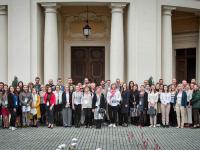
The 30th Jubilee Symposium on Biology and Immunology of Reproduction (SBIR 2025) took place from October 5–7, 2025, in the elegant setting of Liblice Castle. This traditional interdisciplinary conference brings together experts from the fields of reproductive biology, immunology, medicine, and related sciences. One of the main organizers of this year’s edition was Assoc. Prof. Kateřina Komrsková ( Institute of Biotechnology, Czech Academy of Sciences), head of a research group within the ART of the Future project under the Strategy AV21 programme, under whose auspices the conference was held.
The 30th Jubilee Symposium on Biology and Immunology of Reproduction (SBIR 2025) took place from October 5–7, 2025, in the elegant setting of Liblice Castle. This traditional interdisciplinary conference brings together experts from the fields of reproductive biology, immunology, medicine, and related sciences. One of the main organizers of this year’s edition was Assoc. Prof. Kateřina Komrsková ( Institute of Biotechnology, Czech Academy of Sciences), head of a research group within the ART of the Future project under the Strategy AV21 programme, under whose auspices the conference was held.
The 30th Jubilee Symposium on Biology and Immunology of Reproduction (SBIR 2025) took place from October 5–7, 2025, in the elegant setting of Liblice Castle. This traditional interdisciplinary conference brings together experts from the fields of reproductive biology, immunology, medicine, and related sciences. One of the main organizers of this year’s edition was Assoc. Prof. Kateřina Komrsková ( Institute of Biotechnology, Czech Academy of Sciences), head of a research group within the ART of the Future project under the Strategy AV21 programme, under whose auspices the conference was held.

Starting in September this year, a new master’s student, Anna Kolesnik, will join the Future of Assisted Reproduction (ART) project (AV21 Strategy). Anna is enrolled in the Reproductive and Developmental Biology program at the Faculty of Science, Charles University. In her master’s thesis, she will focus on the study of the spindle apparatus in early embryos.
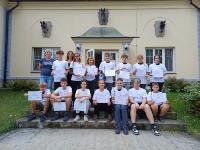
The fourth year of the Science in Action summer school brought 17 students from nearby schools to Liběchov. A week full of lectures, laboratory practicals, and excursions introduced them to the world of science – from assisted reproduction and biomedical research on minipigs to exploring nature in the field. Special attention was given to the topic of assisted reproduction within the AV21 Strategy project – The Future of ART.

Researchers at the Institute of Animal Physiology and Genetics of the Czech Academy of Sciences have described a previously unknown but crucial role of the gene CDK12 in oocyte maturation and fertility. Until now, this gene had been primarily associated with breast and ovarian cancers. However, their latest study demonstrates that removal of this gene in oocytes leads to complete infertility in female mice due to ovarian failure. The loss of CDK12 in oocytes also causes physiological changes in the ovaries. As a result of disrupted folliculogenesis – the proper development and ovulation of oocytes – the ovaries shrink overall. The findings suggest a similar role of this gene in human oocytes as well.
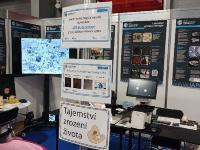
From June 5–7, 2025, the annual Science Fair, the largest public outreach event of the Czech Academy of Sciences, took place in Prague–Letňany. At the booth of the Institute of Animal Physiology and Genetics (ÚŽFG), we presented the new AV21 Strategy project Future of Assisted Reproduction (ART), coordinated by our institute. With this initiative, the Academy of Sciences responds to the global reproduction crisis by linking cutting-edge basic research in ART with the practice of reproductive clinics.
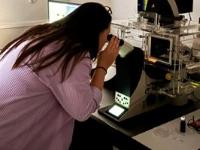
From May 29 to June 2, 2025, a practical course on Experimental Work with Mammalian Oocytes and Embryos was held for master’s students of the Reproductive and Developmental Biology program at the Faculty of Science, Charles University. The aim of the course was to introduce students to techniques of isolating and cultivating mammalian oocytes and early embryos in vitro, as well as to the basics of live-cell microscopy.
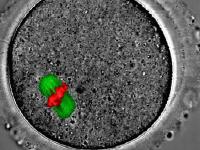
Since January 2025, the Institute of Animal Physiology and Genetics of the Czech Academy of Sciences (IAPG) has been coordinating an ambitious research program, ART – The Future of Assisted Reproduction, which bridges cutting-edge academic research with clinical practice in the field of assisted reproduction.