

III· OOCYTE DAY BROUGHT TOGETHER LEADING EXPERTS IN HUMAN AND OTHER MAMMALIAN OOCYTE RESEARCH
20. 10. 2026
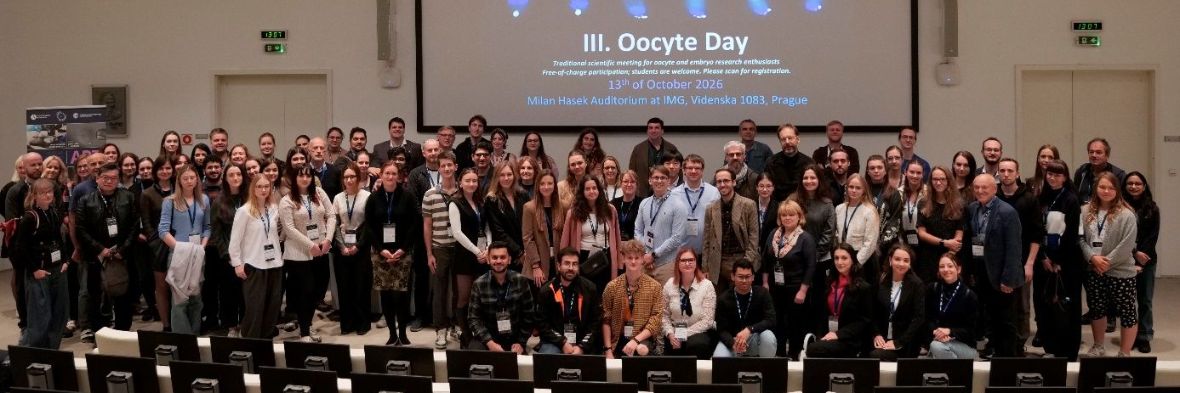
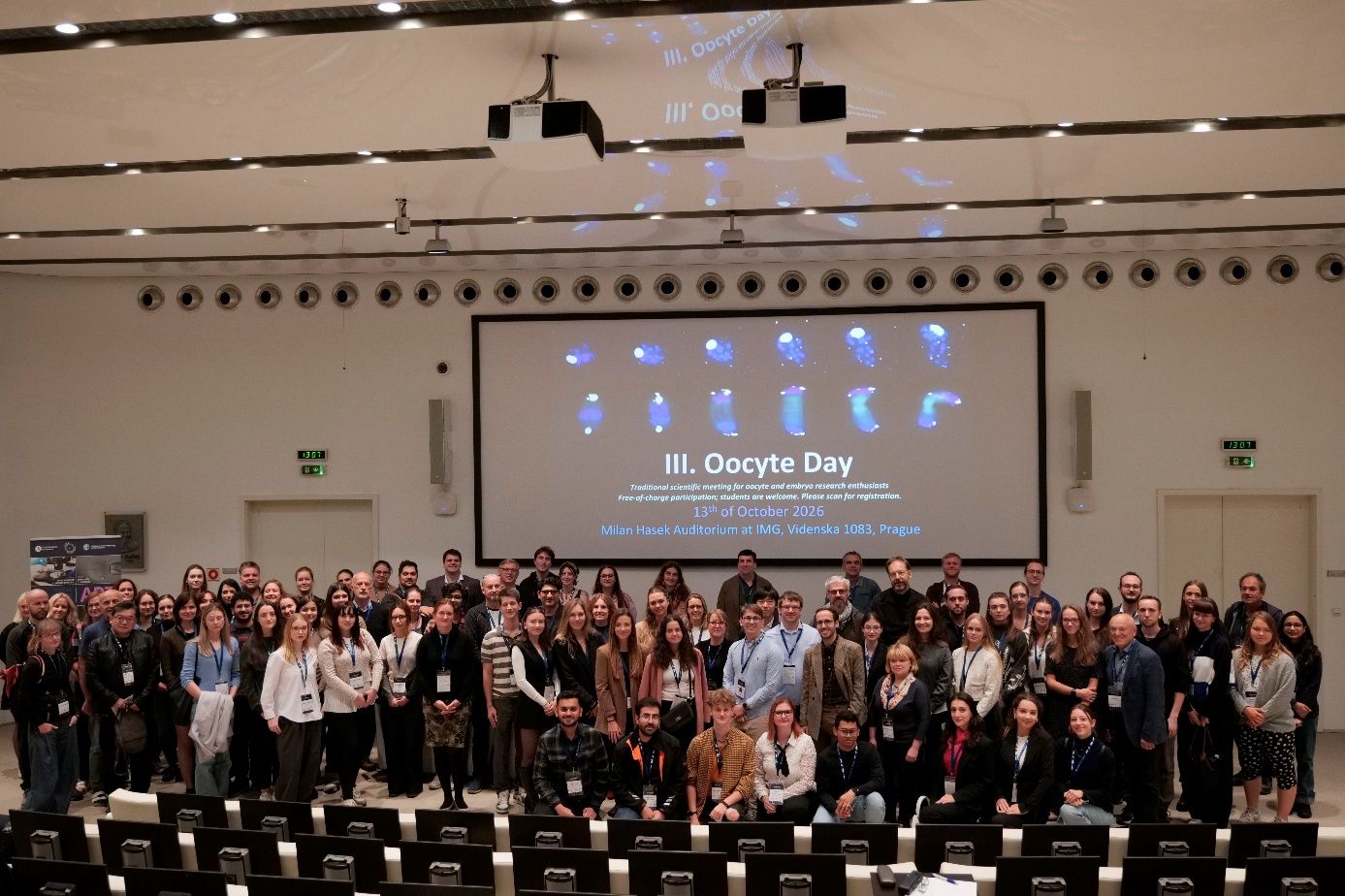
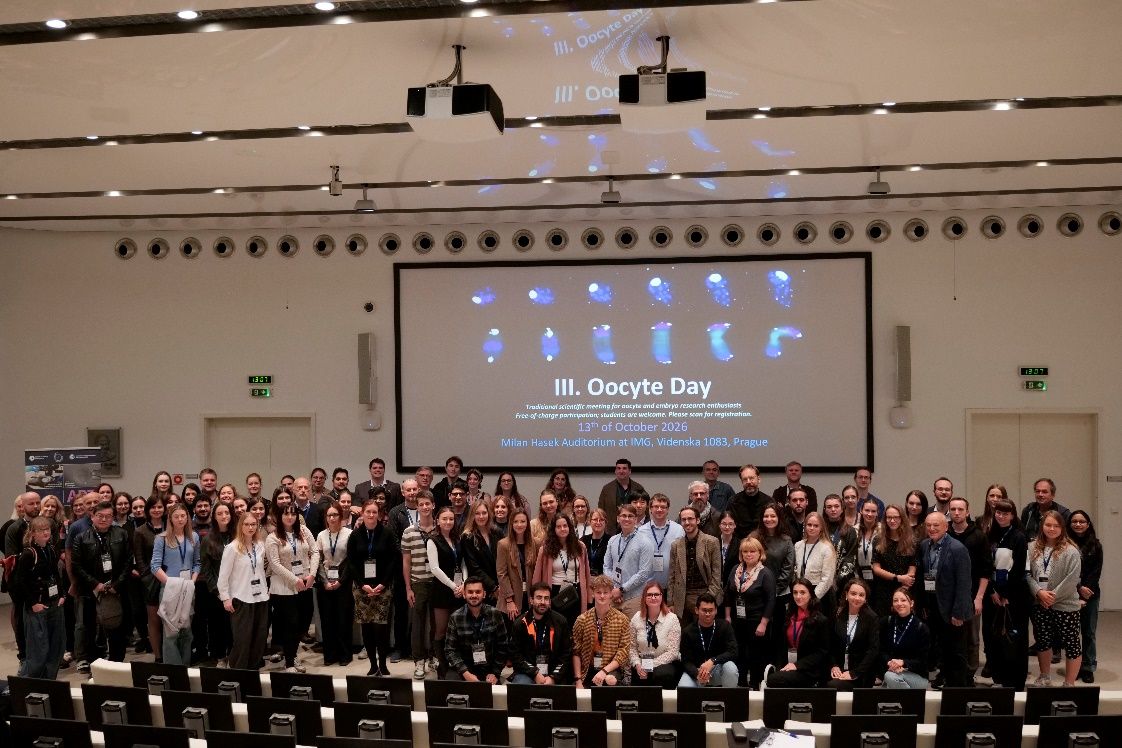
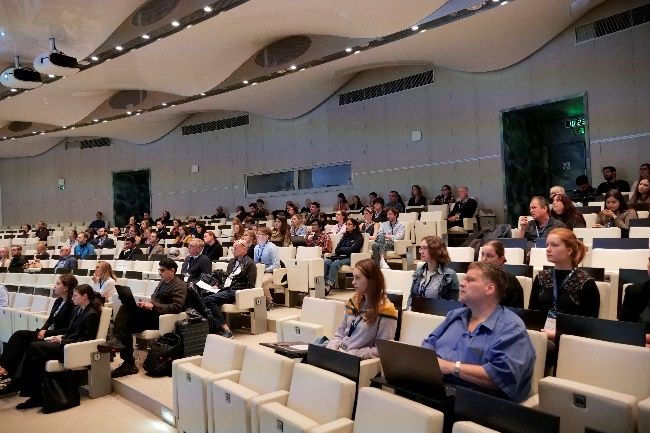
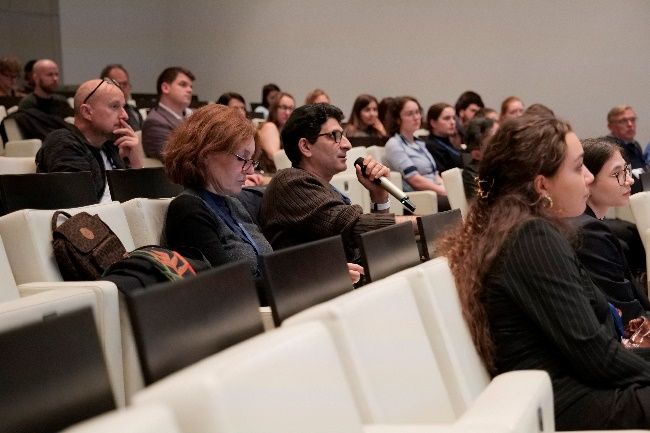
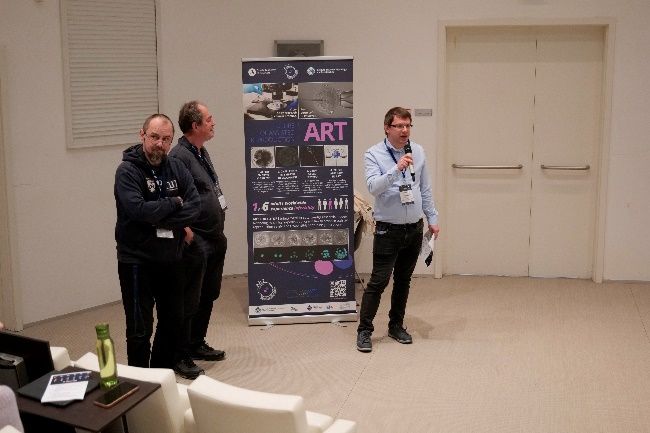
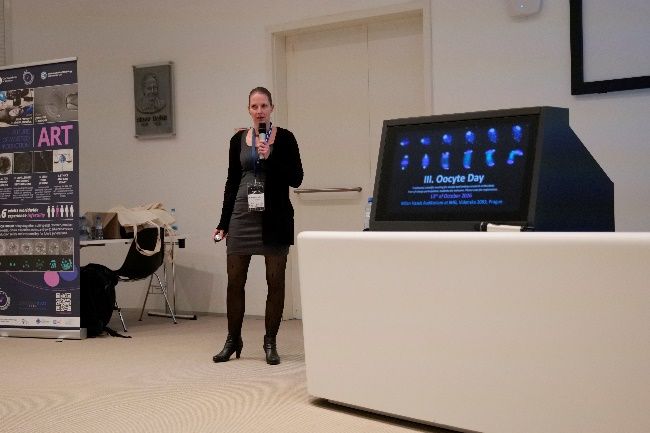
How do errors in chromosome segregation arise in oocytes? What determines their quality, and which new methods help uncover the causes of reproductive disorders? These and other important questions were addressed at the third international scientific conference Oocyte Day, held on 13 October 2026 in Prague. The conference was organised by the Institute of Animal Physiology and Genetics of the Czech Academy of Sciences as part of the Strategy AV21 research programme, Future of Assisted Reproduction (ART), in collaboration with the Institute of Molecular Genetics of the Czech Academy of Sciences. The event attracted more than 100 researchers from Czech and international research institutions, providing an opportunity not only to share the latest scientific findings but also to engage in discussions and establish new collaborations.
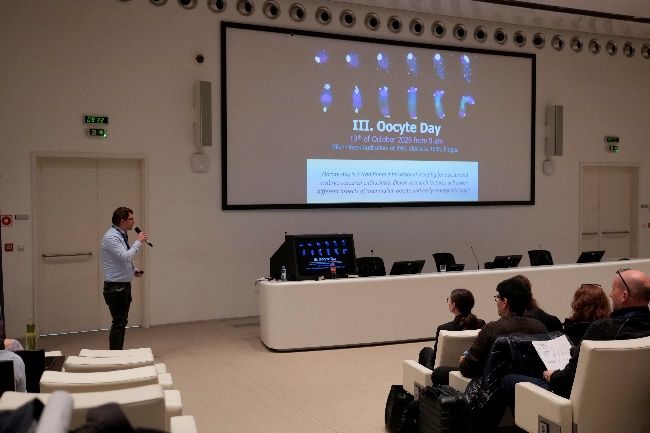 The conference was organised by Dávid Drutovič from the Institute of Animal Physiology and Genetics of the Czech Academy of Sciences, in collaboration with Petr Svoboda from the Institute of Molecular Genetics of the Czech Academy of Sciences, which hosted the event. The programme brought together leading experts in reproductive and developmental biology and highlighted recent advances in research on oocyte maturation, chromosome segregation, genome stability, fertilisation, and advanced imaging techniques.
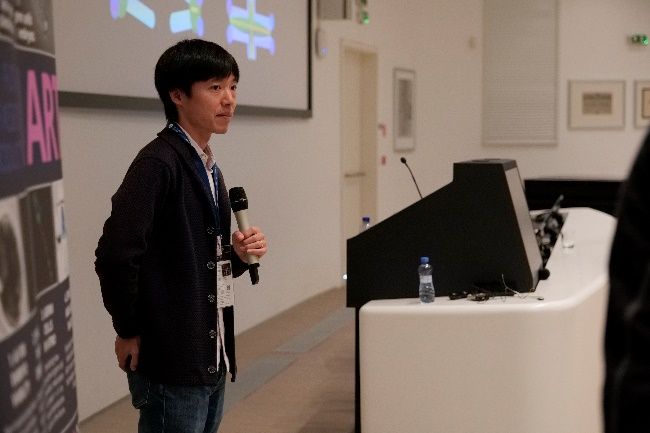
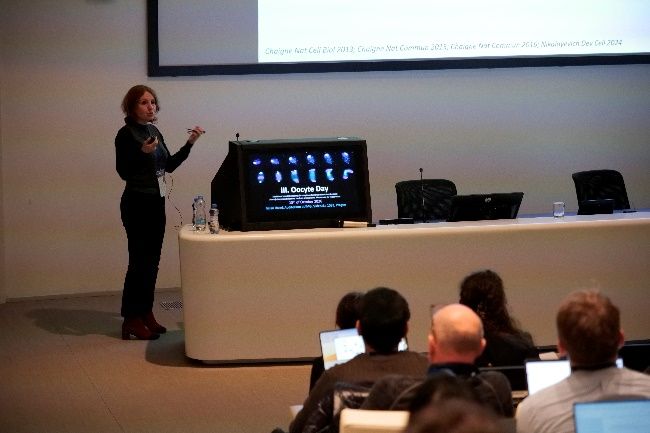
Two distinguished scientists from the United States were the keynote speakers. Ahmed Balboula from the University of Missouri presented new findings on the spatial and temporal regulation of the meiotic spindle in oocytes and the mechanisms underlying aneuploidy – an abnormal number of chromosomes that represents a major cause of infertility and developmental disorders. Takashi Akera from the US National Heart, Lung, and Blood Institute explored the fascinating phenomenon of meiotic drive, a form of so-called "genetic cheating" in which certain genetic elements can bias their own transmission to the next generation, and its implications for mammalian reproduction and evolution.
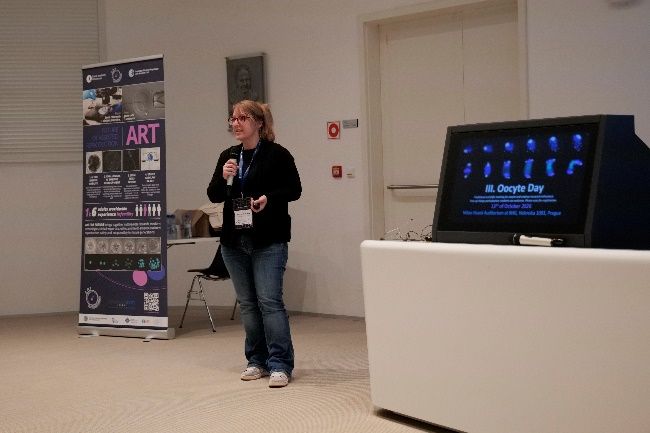
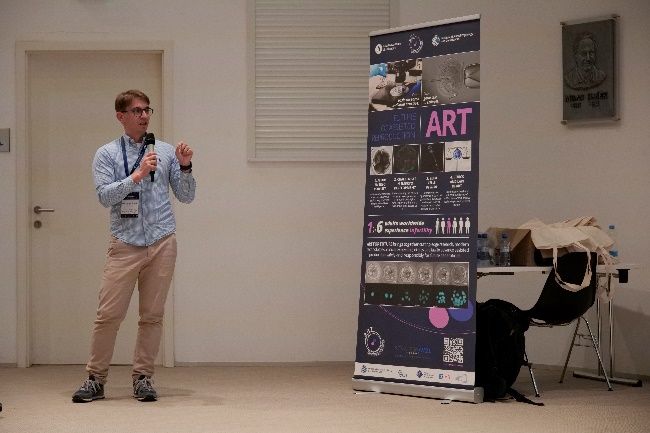
A total of 12 scientific talks were presented. Other prominent international speakers included Marie-Emilie Terret from the Collège de France, Suzanne Madgwick from Newcastle University, and Jerzy Dobrucki from Jagiellonian University in Kraków. Czech research was also strongly represented. Helena Fulková from the Institute of Experimental Medicine of the Czech Academy of Sciences discussed approaches to repairing DNA damage in ageing oocytes, while Michaela Frolíková from the Institute of Biotechnology of the Czech Academy of Sciences presented insights into the molecular organisation of the egg surface and its importance for fertilisation. The programme also featured presentations by early-career researchers studying oocytes and early embryos. Martin Anger from the IAPG introduced the Future of Assisted Reproduction (ART) research programme within Strategy AV21 and outlined its main research objectives.
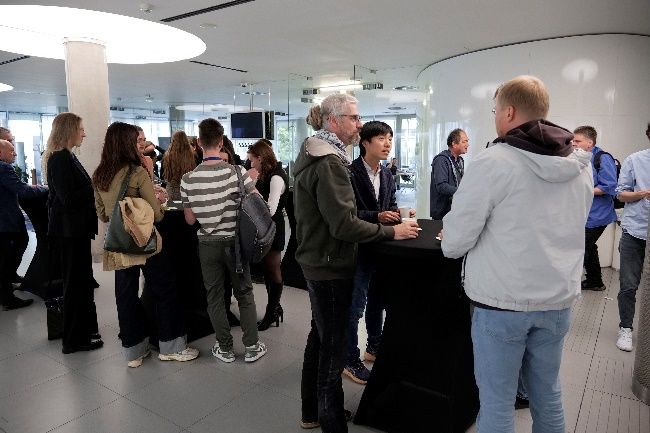
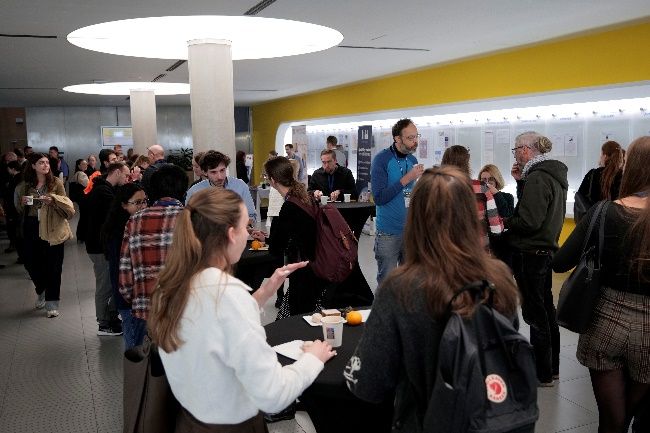
This year's Oocyte Day received exceptionally positive feedback from both Czech and international participants. Alongside the high-quality scientific programme, the conference's success was enhanced by its friendly atmosphere and lively discussions, which continued well beyond the lecture hall. The meeting thus provided not only inspiration for future research but also valuable opportunities to strengthen existing scientific partnerships and establish new collaborations.
The conference was made possible through the support of the Institute of Animal Physiology and Genetics of the Czech Academy of Sciences, the Strategy AV21 – Future of Assisted Reproduction (ART) programme, the Institute of Molecular Genetics of the Czech Academy of Sciences, and the companies SPECION, BioTech, and East Port Praha.
More information is available on the conference website: III. Oocyte Day - ART budoucnosti.
Read also
- IVF FOR WOMEN WITHOUT A PARTNER: LEGAL, ETHICAL AND MEDICAL CONSIDERATIONS
- 31ST SYMPOSIUM ON BIOLOGY AND IMMUNOLOGY OF REPRODUCTION (SBIR) AND 19TH ANNUAL MEETING OF THE EUROPEAN SOCIETY FOR REPRODUCTIVE IMMUNOLOGY (ESRI)
- WHEN SCIENCE COMMUNICATES: THE FUTURE OF ART PROJECT AT RESEARCHERS' NIGHT 2026
- WHAT DETERMINES THE FATE OF AN EMBRYO? JITKA TROJANOVÁ JOINS THE ART RESEARCH TEAM
- ART RETURNS TO THE SCIENCE IN ACTION SUMMER CAMP: A DAY EXPLORING THE FIRST MOMENTS OF LIFE
- ASSISTED REPRODUCTION IS MORE THAN JUST A MEDICAL ISSUE: KATEŘINA KOMRSKOVÁ CO-AUTHORS A NEW BOOK
- WHEN TEACHERS TAKE A SEAT IN THE CLASSROOM: ART AT THE SUMMER SCIENCE CAMP FOR TEACHERS
- THE MAGIC NUMBER 46, SPERM QUALITY AND THE FUTURE OF MALE FERTILITY: KATEŘINA KOMRSKOVÁ ON RADIOŽURNÁL
- SPERM AREN´T ALONE ON THEIR JOURNEY TO FERTILISATION. TINY VESICLES HELP THEM MATURE
- CAN AN INTERSPECIES EMBRYO HELP SAVE ENDANGERED SPECIES?