


CAN AN INTERSPECIES EMBRYO HELP SAVE ENDANGERED SPECIES?
24. 07. 2026
Can sperm retrieved after an individual's death or stored under suboptimal conditions give rise to healthy offspring? Researchers propose using interspecific intracytoplasmic sperm injection (ICSI) as a novel biological test to better assess the quality of these rare sperm samples. In a new paper, Helena Fulka's team discusses the potential, benefits, and limitations of this approach.
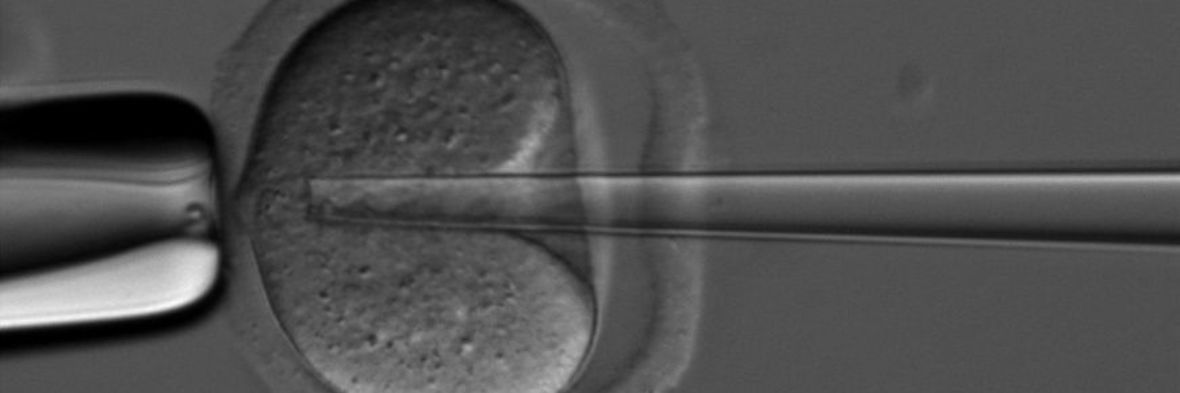
Sperm retrieved after an individual's death or stored under suboptimal conditions may be extremely valuable, yet assessing their true quality remains challenging. In a new paper, researchers from Helena Fulka’s team at the Institute of Experimental Medicine CAS, propose using interspecific intracytoplasmic sperm injection (ICSI) as a novel approach to evaluate sperm functionality. In this method, an oocyte from another readily available species serves as a living biological test.
Such situations arise particularly in the conservation of endangered animal species, where only a few spermatozoa collected under suboptimal conditions may be available, for example, after the death of a genetically valuable individual. Similar questions also apply to posthumous sperm retrieval in humans, such as in victims of armed conflicts. Commonly assessed parameters, including sperm motility and membrane integrity, do not by themselves reveal whether the sperm carries intact, functional DNA capable of supporting the development of a healthy embryo. An immotile, seemingly non-viable sperm cell may still contain an intact genome, whereas a motile sperm may harbour extensive DNA damage, making its use potentially associated with significant risks.
The authors therefore propose complementing current sperm quality assessment with interspecific ICSI, in which sperm is injected directly into the oocyte of another species, such as the mouse. “In this setting, the oocyte acts as a "living biosensor," allowing researchers to evaluate whether sperm chromatin decondenses correctly, whether the male pronucleus forms, whether the sperm successfully activates the oocyte, and whether DNA damage, chromosomal abnormalities, or defects during the first embryonic division become apparent,” explains Helena Fulka. This approach could complement conventional laboratory tests, particularly in cases where sperm samples are so limited that standard testing is not feasible.
However, interspecific ICSI is neither a simple nor a universal solution. Findings obtained using mouse oocytes cannot be directly extrapolated to other species or to humans, and normal early embryonic events do not necessarily guarantee successful subsequent development. In wildlife conservation, the main limitations include the scarcity of biological material, the lack of appropriate control samples, and the technical complexity of the procedure. In humans, the creation of an interspecific embryo, even solely for research purposes, raises significant ethical and legal concerns. In the Czech Republic, this concept is therefore relevant only to research and the conservation of endangered species, and not to clinical applications in humans.The authors therefore emphasise that the method should be used exclusively as an exceptional, non-reproductive research tool, without embryo transfer or implantation, and always under clearly defined scientific, ethical, and legal oversight. “Under these conditions, however, it could become a valuable approach for assessing rare sperm samples and, in the future, contribute particularly to the conservation of genetically valuable individuals from endangered species, “says Helena Fulka.
This work was supported by the ART – The Future of Assisted Reproduction research programme within the Strategy AV21 initiative of the Czech Academy of Sciences, which brings together experts from diverse disciplines to develop new approaches in reproductive medicine, reproductive biology, and the conservation of genetically valuable populations.
Online publication: https://link.springer.com/article/10.1007/s10815-026-03970-7
Read also
- SPERM AREN´T ALONE ON THEIR JOURNEY TO FERTILISATION. TINY VESICLES HELP THEM MATURE
- ART at the Science Fair once again
- FROM OOCYTE TO EMBRYO: STUDENTS GAINED HANDS-ON EXPERIENCE WITH MODERN REPRODUCTIVE BIOLOGY TECHNIQUES
- ART INVITES YOU TO THE III OOCYTE DAY – REGISTRATION IS NOW OPEN
- GUEST LECTURE: THE IMPACT OF GENETIC CHEATING ON MAMMALIAN REPRODUCTION AND SPECIATION
- GUEST LECTURE: THE IMPACT OF GENETIC CHEATING ON MAMMALIAN REPRODUCTION AND SPECIATION
- GUEST LECTURE: GENOME ORGANIZATION AND FUNCTION AROUND THE NUCLEOLUS DURING EARLY EMBRYO DEVELOPMENT
- PhD POSITION: HOW RNA CONTROLS EARLY LIFE
- ART Bridges Law and Medicine: Workshop on Assisted Reproduction in the Case Law of the European Court of Human Rights
- XXVIII Biological Days 2025 Highlighted Current Topics in Reproductive Biology and Oncology